
How to Read Your Kundli Without Getting Lost: A Beginner's Guide to Vedic Birth Chart Reading
Learn how to read your Kundli step by step without confusion by understanding Lagna, houses, planets, signs, dashas, yogas, and transits.
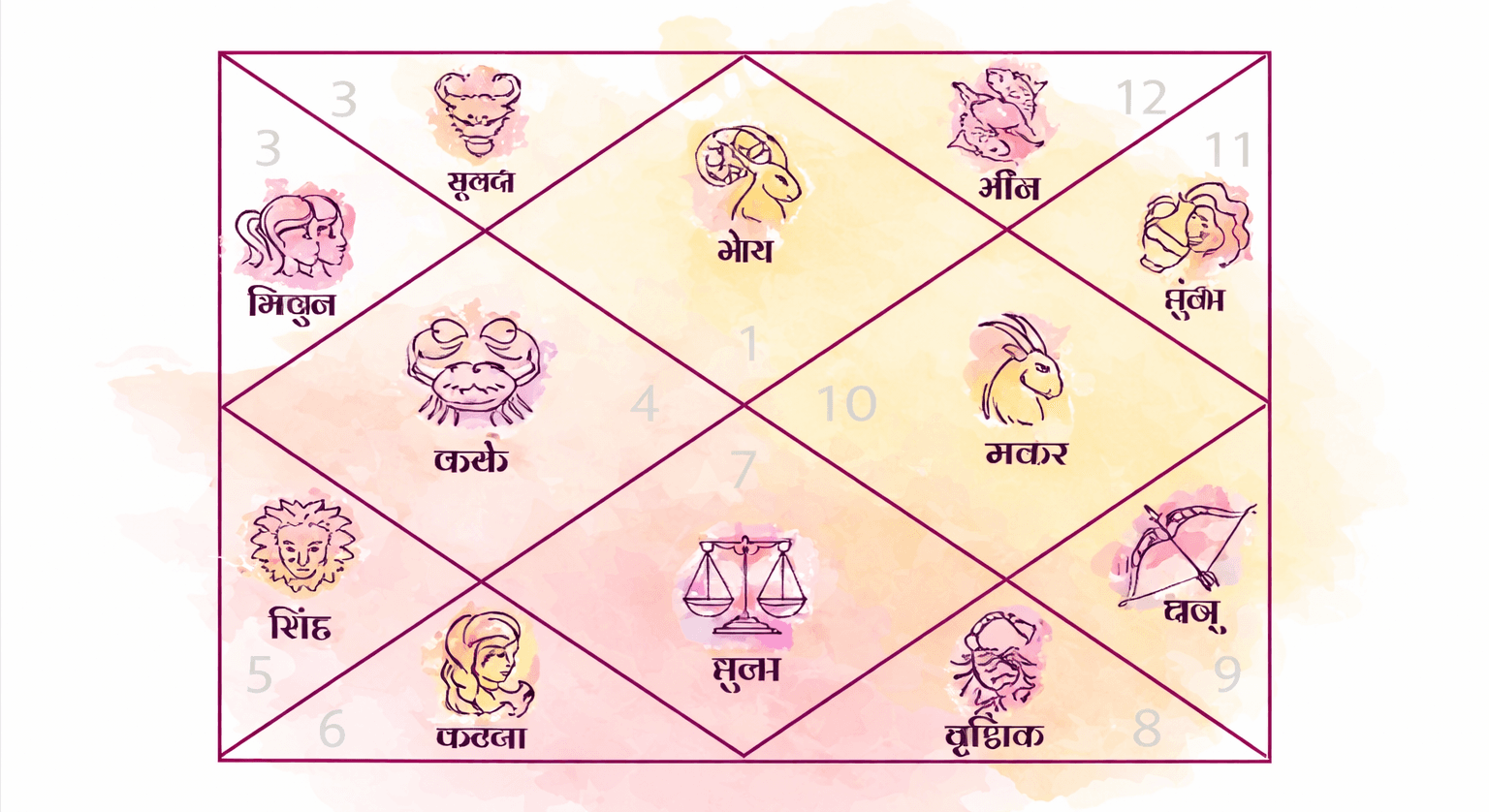
Reading a Kundli can feel confusing in the beginning.
You open your birth chart and suddenly see twelve houses, nine planets, zodiac signs, degrees, nakshatras, dashas, yogas, aspects, divisional charts, and many technical terms. It is easy to feel lost.
Many beginners make the same mistake: they jump directly to random combinations.
They search things like:
- Saturn in 7th house
- Rahu in 10th house
- Mars in Lagna
- Venus in 12th house
- Ketu Mahadasha results
This can be interesting, but it often creates more confusion than clarity.
A Kundli is not a collection of isolated placements. It is a complete map. Every planet, house, sign, and dasha has to be understood in relation to the whole chart.
The right way to read a Kundli is not to memorize thousands of results. The right way is to follow a clear order.
This guide will help you read your Kundli step by step without getting lost.
First, Understand What a Kundli Really Is
A Kundli, also called a Janma Kundli or birth chart, is a map of the sky at the exact time and place of birth.
In Vedic Astrology, the Kundli shows the position of planets, zodiac signs, houses, nakshatras, and other astrological factors at birth. These placements are used to understand personality, health, relationships, career, wealth, education, marriage, spiritual tendencies, and life patterns.
But a Kundli is not a magic paper that gives one fixed answer for everything.
It is more like a blueprint.
It shows tendencies, strengths, weaknesses, timings, possibilities, karmic patterns, and areas where effort is needed.
A good astrologer does not judge one placement alone. They study the chart as a whole. If you want to follow along, start by opening the Free Kundli Generator, then use this article as your reading order.
Step 1: Start With the Lagna
The first thing to check in any Kundli is the Lagna, also called the Ascendant.
The Lagna is the zodiac sign rising on the eastern horizon at the time of birth. It becomes the 1st house of the chart.
The Lagna shows:
- Your physical body
- Personality
- Health
- Confidence
- Basic nature
- Life direction
- How you approach the world
In classical Jyotisha, the Lagna is extremely important because all houses are counted from it. Without understanding the Lagna, the rest of the chart cannot be read properly.
For example, if Aries is rising, Aries becomes the 1st house, Taurus becomes the 2nd house, Gemini becomes the 3rd house, and so on.
If Virgo is rising, Virgo becomes the 1st house, Libra becomes the 2nd house, Scorpio becomes the 3rd house, and the entire house structure changes.
This is why two people with the same Moon sign can have very different lives. Their Lagna may be different.
Before looking at any yoga or dasha, ask:
- What is the Lagna?
- Is the Lagna strong?
- Who is the Lagna lord?
- Where is the Lagna lord placed?
This gives the foundation of the chart. For a deeper explanation, read the 1st House in Vedic Astrology guide.
Step 2: Check the Lagna Lord
The planet ruling the Lagna sign is called the Lagna lord.
This planet is one of the most important planets in the Kundli because it represents the person themselves.
For example:
- Aries Lagna: Mars is the Lagna lord
- Taurus Lagna: Venus is the Lagna lord
- Gemini Lagna: Mercury is the Lagna lord
- Cancer Lagna: Moon is the Lagna lord
- Leo Lagna: Sun is the Lagna lord
- Virgo Lagna: Mercury is the Lagna lord
- Libra Lagna: Venus is the Lagna lord
- Scorpio Lagna: Mars is the Lagna lord
- Sagittarius Lagna: Jupiter is the Lagna lord
- Capricorn Lagna: Saturn is the Lagna lord
- Aquarius Lagna: Saturn is the Lagna lord
- Pisces Lagna: Jupiter is the Lagna lord
Now check where the Lagna lord is placed.
If the Lagna lord is strong, the person usually has better vitality, confidence, and ability to handle life.
If the Lagna lord is weak, afflicted, or badly placed, the person may face more struggle in health, direction, confidence, or self-expression.
But do not judge too quickly.
A Lagna lord in the 12th house does not always mean loss. It may show foreign settlement, spiritual life, research, isolation, hospitals, ashrams, or work behind the scenes.
A Lagna lord in the 8th house does not always mean suffering. It may show research, occult knowledge, transformation, inheritance, hidden knowledge, or deep psychological strength.
The result depends on dignity, aspects, conjunctions, dasha, and the overall chart.
Step 3: Understand the Twelve Houses
Once you know the Lagna, understand what each house represents.
Do not rush into yogas. First learn the houses.
1st House: Self and Body
The 1st house shows personality, health, body, confidence, appearance, and life direction.
2nd House: Wealth and Speech
The 2nd house shows family, speech, savings, food habits, values, and accumulated wealth.
3rd House: Courage and Effort
The 3rd house shows courage, communication, younger siblings, writing, skills, media, and self-effort.
4th House: Home and Inner Peace
The 4th house shows mother, home, property, education, vehicles, emotional comfort, and inner happiness.
5th House: Intelligence and Purva Punya
The 5th house shows intelligence, education, children, creativity, mantra, romance, speculation, and past-life merit.
6th House: Disease and Competition
The 6th house shows disease, debts, enemies, service, disputes, competition, and daily work.
7th House: Marriage and Partnership
The 7th house shows marriage, spouse, business partnerships, public dealings, and contracts.
8th House: Transformation and Hidden Matters
The 8th house shows longevity, sudden events, secrets, occult knowledge, inheritance, research, and deep transformation.
9th House: Dharma and Fortune
The 9th house shows father, guru, religion, higher learning, fortune, blessings, pilgrimage, and dharma.
10th House: Career and Karma
The 10th house shows career, profession, public image, karma, authority, status, and responsibilities.
11th House: Gains and Desires
The 11th house shows income, gains, networks, elder siblings, ambitions, and fulfillment of desires.
12th House: Loss and Liberation
The 12th house shows expenses, sleep, foreign lands, isolation, hospitals, ashrams, spiritual liberation, and detachment.
A beginner should know these meanings clearly before reading any chart.
Most confusion happens because people try to interpret planets without understanding the houses properly. You can browse more house-based lessons in the Houses section.
Step 4: Learn What the Planets Represent
After houses, understand the planets.
Each planet has a natural nature.
Sun
The Sun represents soul, authority, father, confidence, government, leadership, vitality, and self-respect.
Moon
The Moon represents mind, emotions, mother, comfort, public connection, sensitivity, memory, and mental peace.
Mars
Mars represents courage, energy, anger, action, land, brothers, weapons, engineering, discipline, and conflict.
Mercury
Mercury represents intelligence, speech, business, calculation, communication, writing, logic, and adaptability.
Jupiter
Jupiter represents wisdom, dharma, guru, children, knowledge, expansion, blessings, ethics, and spirituality.
Venus
Venus represents marriage, beauty, comfort, luxury, art, love, relationships, vehicles, pleasure, and refinement.
Saturn
Saturn represents discipline, delay, karma, hard work, suffering, old age, labor, patience, responsibility, and endurance.
Rahu
Rahu represents obsession, foreign influence, ambition, illusion, technology, unconventional paths, sudden rise, and worldly hunger.
Ketu
Ketu represents detachment, spirituality, separation, past-life karma, moksha, research, sharp perception, and inner dissatisfaction.
These are natural significations.
But in a Kundli, a planet also becomes the lord of certain houses. That changes how it behaves for each Lagna.
For example, Jupiter is naturally benefic. But for some Lagnas, Jupiter may rule difficult houses. Saturn is naturally malefic, but for Taurus and Libra Lagna, Saturn can become a powerful yoga-giving planet because it rules auspicious houses.
So do not judge planets only as "good" or "bad."
Always ask:
- What does this planet naturally represent?
- Which houses does it rule?
- Where is it placed?
- Is it strong or weak?
- Which planets influence it?
For more planet-focused learning, use the Planets guides.
Step 5: Check House Lords, Not Just Planets in Houses
This is where real chart reading begins.
Many people only look at planets sitting in a house.
For example, if no planet is in the 10th house, they think career is weak.
That is wrong.
An empty house is not dead. Every house has a lord.
To judge career, you must check:
- 10th house
- 10th lord
- Planets in the 10th house
- Planets aspecting the 10th house
- Condition of the Sun
- Condition of Saturn
- Dashamsha chart
- Running dasha
Similarly, for marriage, do not only check planets in the 7th house.
Check:
- 7th house
- 7th lord
- Venus
- Jupiter
- Navamsha
- Upapada Lagna
- Dasha
- Afflictions and benefic support
This principle applies to every area of life.
The lord of a house carries the result of that house. Wherever the lord goes, it takes the energy of that house with it.
For example:
If the 10th lord goes to the 9th house, career may connect with teaching, law, religion, higher education, fortune, guidance, or long-distance matters.
If the 2nd lord goes to the 11th house, wealth and gains may support each other.
If the 7th lord goes to the 12th house, marriage may connect with foreign lands, expenses, distance, privacy, or spiritual themes.
This is why house lordship is more important than memorizing random planetary placements.
Step 6: Check Planetary Strength
A planet gives better results when it has strength.
A planet may be strong because it is:
- In its own sign
- Exalted
- In a friendly sign
- Well-placed in Kendra or Trikona
- Supported by benefic aspects
- Strong in divisional charts
- Not combust
- Not badly afflicted
- Strong in Shadbala or other strength systems
A planet may become weak if it is:
- Debilitated
- Combust
- In an enemy sign
- Heavily afflicted
- Placed in difficult houses without support
- Weak in divisional charts
- Defeated in planetary war
- Connected with harmful combinations
But even this must be read carefully.
A debilitated planet is not always useless. Neecha Bhanga, strong aspects, exchange, dasha support, and divisional strength can change the result.
An exalted planet is not always perfect. If it owns difficult houses or is badly afflicted, it may still give mixed results.
Strength does not mean only "good." Weakness does not mean only "bad."
Strength means the planet has power to deliver its results. Whether those results feel pleasant or difficult depends on its role in the chart.
Step 7: Understand Kendras and Trikonas
In Vedic Astrology, some houses carry special importance.
The Kendra houses are:
- 1st house
- 4th house
- 7th house
- 10th house
These are the pillars of life.
They show self, home, relationship, and career.
The Trikona houses are:
- 1st house
- 5th house
- 9th house
These are houses of dharma, intelligence, fortune, and past-life merit.
When Kendra and Trikona lords connect, powerful yogas can form.
For example, if the 9th lord and 10th lord combine, it may create a strong dharma-karma connection. If the 5th lord and 10th lord connect, intelligence and career may support each other.
This is why classical astrology gives so much importance to Kendra-Trikona relationships.
But again, do not judge only one combination. Check strength, dignity, affliction, and dasha.
Step 8: Do Not Ignore the Moon
The Moon is extremely important in Vedic Astrology.
The Moon shows the mind.
Even if the Lagna is strong, a weak or afflicted Moon can make the person mentally restless. Even if external life looks successful, the person may not feel peaceful inside.
The Moon is also used for:
- Daily predictions
- Transit results
- Dasha interpretation
- Mental health
- Emotional nature
- Public connection
- Mother and comfort
The Moon sign is called Chandra Rashi.
Many traditional predictions are read from the Moon sign because the mind experiences the result of karma.
For example, Saturn transit from the Moon is used in Sade Sati. Jupiter transit from the Moon is also widely considered for general blessings and opportunities.
So while Lagna shows the physical and practical life path, Moon shows the inner experience.
Both must be read together.
Step 9: Understand Nakshatras
The zodiac is divided into 27 nakshatras. Each nakshatra has its own nature, deity, symbol, planetary ruler, and psychological pattern.
Nakshatras add depth to chart reading.
For example, two people may both have Moon in Taurus, but one may have Moon in Rohini and another may have Moon in Krittika. Their emotional nature may be different.
Nakshatras are especially important for:
- Moon analysis
- Vimshottari Dasha
- Temperament
- Marriage compatibility
- Subtle karmic patterns
- Spiritual tendencies
The birth nakshatra of the Moon is used to calculate the starting point of Vimshottari Dasha.
So if you want to understand timing in Vedic Astrology, nakshatras cannot be ignored. Continue with the Nakshatra guides when you are ready for that layer, and compare the birth nakshatra shown in your Birth Panchang.
Step 10: Read the Dasha Before Making Predictions
This is one of the most important rules.
A promise in the chart may not manifest until the right dasha comes.
The Kundli shows what is possible. The dasha shows when it becomes active.
The most commonly used dasha system is Vimshottari Dasha, based on the Moon's nakshatra at birth.
Each Mahadasha activates the themes of a planet. That planet's house placement, lordship, strength, conjunctions, aspects, and nakshatra influence become important during its period.
For example, if someone enters Venus Mahadasha, you must check:
- Where Venus is placed
- Which houses Venus rules
- Whether Venus is strong or weak
- Which planets aspect Venus
- Which planets are joined with Venus
- Venus in Navamsha
- Venus as a significator of marriage, comfort, art, vehicles, and relationships
If Venus is connected with the 10th house, career may become important.
If Venus is connected with the 7th house, relationships may become important.
If Venus is connected with the 12th house, foreign lands, expenses, luxury, or spiritual retreat may become important.
This is why predictions without dasha are often incomplete. After reading the principle, open your Vimshottari Dasha timeline and then browse the Dashas guides for deeper timing topics.
Step 11: Use Transits as Triggers, Not the Whole Story
Transits show the current movement of planets in the sky.
They are important, but they should not be read alone.
A transit can trigger results only when the birth chart and dasha support those results.
For example, Jupiter transiting the 10th house may support career growth. But if the running dasha has no connection with career, the result may be mild.
Saturn transiting a difficult house may create pressure. But if the person is running a strong and supportive dasha, they may handle the pressure productively.
Think of it like this:
- Birth chart shows the promise
- Dasha shows the timing
- Transit shows the trigger
All three should work together. You can also explore live Planetary Transits and read What Planetary Transits Really Show.
Step 12: Check Divisional Charts Carefully
Divisional charts, also called Vargas, are used for deeper analysis.
The most important ones for beginners are:
Navamsha Chart
Navamsha, or D9, is very important for marriage, dharma, inner strength, and the deeper dignity of planets.
Dashamsha Chart
Dashamsha, or D10, is used for career and professional life.
Saptamsha Chart
Saptamsha, or D7, is used for children and lineage.
Dwadasamsha Chart
D12 is used for parents and inherited patterns.
But beginners should be careful.
Do not jump into divisional charts before understanding the main birth chart. The Rashi chart is the foundation. Divisional charts refine the judgment; they do not replace the main chart.
Also, divisional charts require accurate birth time. Even a small birth time error can affect some varga charts.
Step 13: Avoid One-Line Predictions
One-line astrology is the biggest reason people get confused.
Examples of bad interpretation:
- "Rahu in 10th means fame."
- "Saturn in 7th means late marriage."
- "Mars in 1st means anger."
- "Jupiter in 2nd means wealth."
- "Ketu in 12th means moksha."
These statements may sometimes be partly true, but they are incomplete.
A better way to read is:
Rahu in the 10th may create strong ambition, unconventional career, public visibility, foreign influence, technology-related work, or hunger for status. But the final result depends on the sign, 10th lord, aspects, dasha, and overall chart.
Saturn in the 7th may delay or mature relationships, but it can also give commitment, loyalty, and long-lasting partnership if well-placed.
Mars in the 1st may give anger, but it can also give courage, leadership, engineering ability, athletic nature, and decisive action.
Good astrology is not fear-based. It is context-based.
A Simple Order for Reading Any Kundli
Here is a practical order you can follow:
- Identify the Lagna
- Check the Lagna lord
- Study the Moon and Moon sign
- Understand planets in the 1st house
- Study the 10th house for career
- Study the 7th house for marriage
- Study the 2nd and 11th houses for wealth
- Study the 5th and 9th houses for intelligence and fortune
- Study the 6th, 8th, and 12th houses for challenges
- Check planetary dignity
- Check aspects and conjunctions
- Check yogas
- Check Vimshottari Dasha
- Check transits
- Confirm with divisional charts
This order keeps you from getting lost.
Do not start with rare yogas. Do not start with fear-based combinations. Do not start with random internet interpretations.
Start with the foundation.
Example: How Not to Get Confused
Suppose someone has Saturn in the 10th house.
A beginner may immediately say:
"Career will be delayed."
But a better astrologer asks:
- Which Lagna?
- Which house does Saturn rule?
- Is Saturn exalted, debilitated, or in own sign?
- Is Saturn retrograde?
- Is Saturn aspected by Jupiter?
- Is Saturn connected to the 10th lord?
- What is the running dasha?
- What does the Dashamsha show?
- Is Saturn a yoga-karaka for this Lagna?
For Taurus Lagna, Saturn rules the 9th and 10th houses and becomes a powerful yoga-karaka. Saturn in the 10th may give career growth through discipline, structure, authority, and long-term karma.
For some other Lagnas, Saturn may give more struggle or delay.
Same planet. Same house. Different result.
This is why context matters.
What Beginners Should Focus on First
If you are new to Kundli reading, focus on these five things first:
1. Lagna
This tells you the foundation of the chart.
2. Lagna Lord
This shows where the person's life energy flows.
3. Moon
This shows the mind and emotional experience.
4. House Lords
This shows how different areas of life connect.
5. Dasha
This shows which karma is active now.
Once these are clear, yogas and transits become easier to understand.
Common Mistakes While Reading Kundli
Mistake 1: Reading Only the Sun Sign
Vedic Astrology does not depend only on the Sun sign. Lagna and Moon sign are extremely important.
Mistake 2: Judging One Planet Alone
No planet gives results in isolation. Always check sign, house, lordship, aspect, conjunction, dignity, and dasha.
Mistake 3: Ignoring the Dasha
Without dasha, timing becomes weak. A strong yoga may remain inactive until its dasha operates.
Mistake 4: Fear-Based Reading
Not every difficult placement destroys life. Many difficult combinations create strength, maturity, discipline, and transformation.
Mistake 5: Jumping to Divisional Charts Too Early
Divisional charts are powerful, but the main Rashi chart must be understood first.
Mistake 6: Copy-Pasting Results
Real astrology requires synthesis. Internet lists can help beginners, but they cannot replace proper chart judgment.
Classical Approach to Kundli Reading
Classical texts such as Brihat Parashara Hora Shastra, Brihat Jataka, Saravali, Phaladeepika, Jataka Parijata, and Uttara Kalamrita repeatedly show that horoscope reading is based on synthesis.
They do not teach astrology as one isolated placement at a time.
They emphasize:
- Lagna
- House lords
- Planetary strength
- Yogas
- Aspects
- Dignity
- Dashas
- Overall chart judgment
This is why a serious student should avoid mechanical astrology.
A placement is only a seed. The whole chart shows whether that seed grows, when it grows, and what kind of fruit it gives.
How Parashar Hora Can Help You Read Your Kundli
A good Kundli tool should not only show a chart. It should help you understand the chart step by step.
With Parashar Hora, you can generate your birth chart and study:
- Free Kundli and birth chart
- Lagna and the 1st House
- Planets, houses, yogas, and divisional charts
- Nakshatras
- Vimshottari Dasha
- Birth Panchang
- Planetary Transits
- AI Kundli Analysis
The best way to use any astrology tool is not to search for one scary placement. Instead, read your Kundli in order.
Start with Lagna. Then Lagna lord. Then Moon. Then houses. Then dashas. Then transits. After that, use AI Kundli Analysis to ask focused questions about the chart you have already understood.
This method gives clarity.
Final Thoughts
Reading a Kundli becomes confusing only when you try to read everything at once.
The chart has a structure. Once you follow that structure, the confusion reduces.
The Lagna shows who you are. The houses show areas of life. The planets show forces acting in the chart. The signs show style and environment. The house lords show connections. The dashas show timing. The transits show current triggers.
Do not read your Kundli as a list of disconnected predictions. Read it as a complete life map.
A Kundli is not meant to frighten you. It is meant to help you understand your nature, timing, strengths, challenges, and direction.
When read properly, it does not trap you in fate. It gives awareness.
And awareness is the first step toward wiser action.
Frequently Asked Questions
What is the first thing to check in a Kundli?
The first thing to check is the Lagna or Ascendant. It is the foundation of the birth chart and determines how all twelve houses are arranged.
Is Moon sign more important than Lagna?
Both are important. Lagna shows physical life, personality, and practical direction. Moon sign shows the mind, emotions, and inner experience.
Can I read my Kundli without knowing astrology deeply?
You can understand the basics by learning Lagna, houses, planets, house lords, dashas, and transits. Deep prediction requires more study and synthesis.
Why do different astrologers give different predictions?
Different astrologers may use different methods, chart styles, dashas, divisional charts, and interpretive priorities. Also, astrology requires synthesis, not mechanical reading.
Is an empty house bad in Kundli?
No. An empty house is not bad. Every house has a lord, and that lord carries the results of the house.
Which is more important: birth chart or dasha?
Both are important. The birth chart shows the promise. The dasha shows when that promise becomes active.
Should transits be read from Lagna or Moon?
Both are useful. Transits from Moon show mental and experiential effects, while transits from Lagna show practical life events. Serious reading considers both.
Can one bad planet ruin the whole Kundli?
No. One difficult placement cannot ruin the entire chart. The full horoscope, planetary strength, yogas, dashas, and benefic support must be considered.