
Krishna Janmashtami 2026: Date, Puja Time, Vrat and Story
Krishna Janmashtami 2026 falls on September 4. Check Ashtami Tithi, Nishita Puja time, fasting, Parana guidance, simple Puja Vidhi and Krishna's birth story.
Krishna Janmashtami 2026
Krishna Janmashtami will be celebrated on Friday, September 4, 2026.
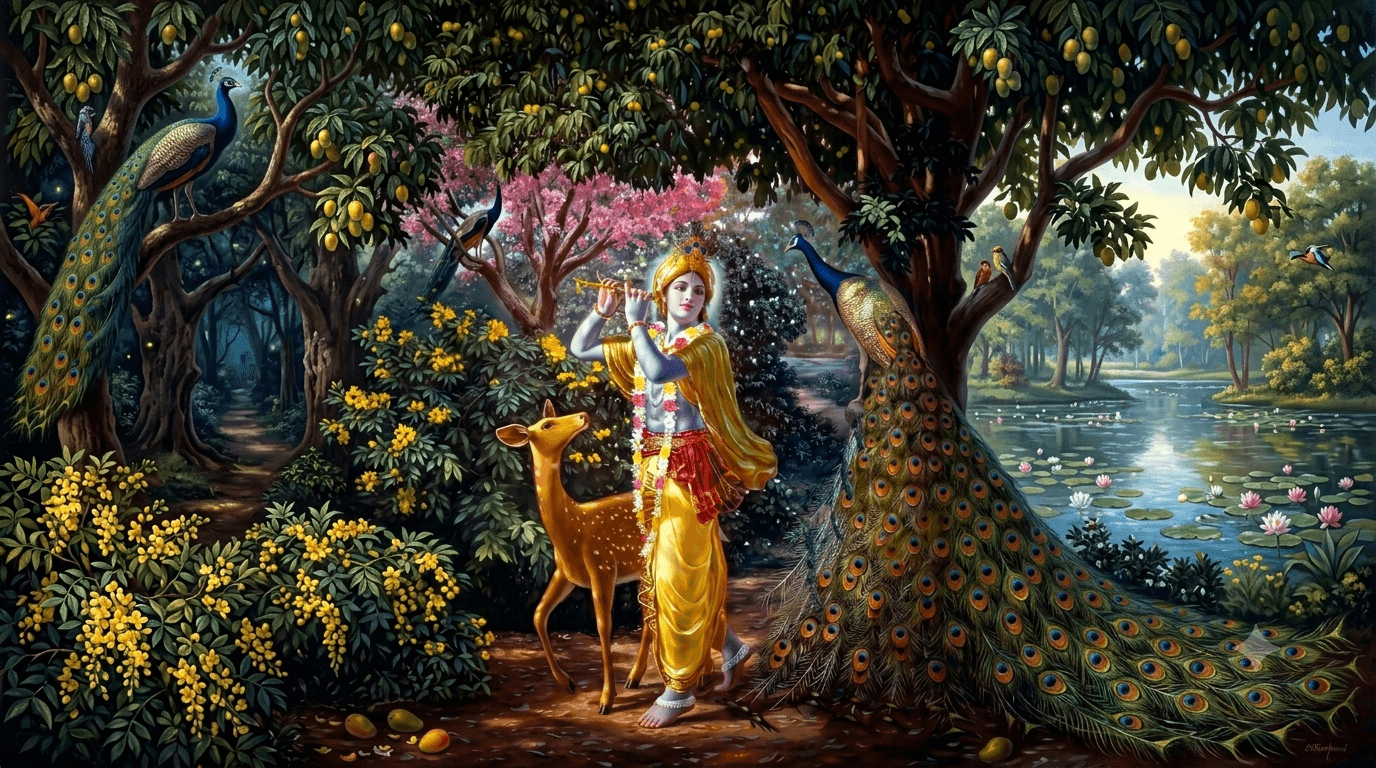
Janmashtami marks the appearance of Lord Krishna, who was born to Devaki and Vasudeva in Mathura during a time of fear, imprisonment and injustice.
The festival is celebrated with fasting, temple visits, devotional singing, readings from Krishna’s life, midnight worship and the joyful welcoming of Bala Krishna—the child form of the Lord.
But Janmashtami is more than the celebration of a divine birth.
It is a reminder that hope can appear in the darkest place, courage can survive under oppression, and love can achieve what power cannot.
Krishna Janmashtami 2026 at a Glance
| Festival detail | New Delhi timing |
|---|---|
| Janmashtami date | Friday, September 4, 2026 |
| Ashtami Tithi begins | 2:25 AM on September 4 |
| Ashtami Tithi ends | 12:13 AM on September 5 |
| Rohini Nakshatra begins | 12:29 AM on September 4 |
| Rohini Nakshatra ends | 11:04 PM on September 4 |
| Nishita Puja | 11:57 PM to 12:43 AM |
| Midnight moment | 12:20 AM on September 5 |
| Dharma Shastra Parana | After 6:01 AM on September 5 |
| Common modern Parana | After 12:43 AM on September 5 |
| Dahi Handi and Nandotsav | September 5, 2026 |
These timings are calculated for New Delhi. Nishita, sunrise, moonrise and Parana timings change according to location, so use the Daily Panchang for your city before finalising the ceremony time. You can also follow the wider festival sequence in the Hindu Calendar.
Why Is Janmashtami Celebrated at Midnight?
Janmashtami is observed on Krishna Paksha Ashtami, the eighth lunar day of the dark fortnight.
According to the traditional birth narrative, Krishna appeared during the deep darkness of night. Devotees therefore wait until Nishita Kaal, the traditional midnight period, before performing the main birth celebration.
At midnight, temple bells ring, conches are sounded, devotional songs are sung and the infant form of Krishna is ceremonially welcomed.
The darkness has a symbolic meaning.
Krishna does not appear in a palace surrounded by comfort. He appears in a prison, at a moment when his parents have little control over their circumstances.
Janmashtami therefore carries a message that is deeply human:
Darkness may describe the situation around us, but it does not have to decide what is born within us.
The Story of Krishna’s Birth
Mathura was ruled by Kamsa, a powerful king driven by fear and insecurity.
A prophecy warned him that the eighth child of his sister Devaki would bring an end to his rule. Instead of questioning his own actions, Kamsa tried to control the future through violence.
He imprisoned Devaki and her husband Vasudeva.
When the time came for their eighth child to appear, the Srimad Bhagavatam describes the night as peaceful and auspicious. Krishna appeared before his parents, and then assumed the form of an ordinary infant.
The prison guards fell asleep, the locked doors opened and Vasudeva’s chains were released. Carrying the child in a basket, he left the prison and crossed the Yamuna to Gokula.
There, Krishna was placed in the care of Nanda and Yashoda. Vasudeva then returned to Mathura.
The scriptural narrative connects Krishna’s birth with Rohini Nakshatra, the quieting of fear and the protection of the infant as Vasudeva carried him to Gokula.
This is not merely a story about a miraculous escape.
It is also a story about parents protecting a child, about ordinary courage acting in extraordinary circumstances, and about faith continuing even when the future is uncertain.
What Krishna’s Birth Represents
Hope within darkness
Krishna’s first surroundings were not peaceful. Yet the prison could not prevent his arrival.
The message is not that pain is imaginary. The message is that pain does not possess unlimited power.
Dharma without bitterness
Krishna’s life repeatedly brings together courage and intelligence.
Dharma is not passive submission to wrongdoing, but neither is it uncontrolled anger. It requires clarity, proportion, patience and the willingness to act responsibly.
In the Bhagavad Gita, Krishna explains that divine manifestation is associated with protecting the righteous and restoring Dharma when it declines.
Love in different forms
Krishna is loved as Devaki’s son, Yashoda’s child, Arjuna’s guide, Sudama’s friend and the beloved of the people of Vrindavan.
This makes Krishna devotion unusually personal. A devotee may approach him with reverence, friendship, parental affection or complete surrender.
Joy as a spiritual quality
Krishna’s childhood stories include music, friendship, butter, cows, forests, teasing and laughter.
Janmashtami reminds us that spiritual life does not always have to appear heavy or joyless. Discipline and devotion can exist alongside warmth, creativity and celebration.
How Janmashtami Is Celebrated
Janmashtami traditions differ across India.
Mathura and Vrindavan become major centres of worship because of their association with Krishna’s birth and childhood. Temples hold devotional singing, scripture readings, dramatic performances and midnight ceremonies.
Common celebrations include:
- fasting or eating simple permitted foods;
- decorating a Krishna altar;
- bathing and dressing a Bala Krishna murti;
- singing bhajans and performing Kirtan;
- reading from the Bhagavad Gita or Bhagavata Purana;
- placing infant Krishna in a decorated cradle;
- drawing small symbolic footprints at home;
- preparing Prasad;
- visiting a Krishna temple;
- celebrating Nandotsav the next day.
In Maharashtra and some western regions, Dahi Handi is commonly held the following day. It represents stories of young Krishna and his friends reaching pots of butter and curd suspended above the ground.
Dahi Handi should be conducted only as an organised event with suitable safety arrangements. Children should not attempt unsafe human pyramids or similar stunts without trained adult supervision.
Simple Janmashtami Puja Vidhi at Home
The Puja does not need to be expensive or excessively complicated.
1. Clean the worship area
Clean the room and altar. Place a picture or murti of Bala Krishna respectfully.
Use flowers, leaves or simple decorations that are already available rather than treating decoration as a competition.
2. Take a Sankalpa
A simple Sankalpa may be:
On Krishna Janmashtami, I pray for clarity, devotion and the strength to act according to Dharma.
A Sankalpa should connect worship with how we intend to live.
3. Light a lamp safely
Place the lamp on a stable surface, away from curtains, children and pets.
4. Offer water and simple worship
Offer clean water, flowers, Tulsi leaves where traditionally used, fruit and simple Prasad.
Family traditions may include Panchamrita Abhisheka using milk, curd, ghee, honey and sugar. Large quantities are unnecessary, and food should not be wasted.
5. Chant a Krishna mantra
A simple mantra is:
Om Namo Bhagavate Vasudevaya
Devotees may also chant the Hare Krishna Mahamantra according to their tradition.
The number of repetitions is less important than sincerity and attention.
6. Read or narrate Krishna’s birth story
Read a short passage or tell the story in your own words.
For families with children, the story can be discussed through questions such as:
- Why was Kamsa controlled by fear?
- What gave Vasudeva courage?
- Why did Yashoda’s love matter?
- How can intelligence be used to protect others?
7. Perform midnight worship
During Nishita Kaal, offer prayers, sing an Aarti and symbolically welcome Bala Krishna.
A small murti may be placed in a cradle and gently rocked according to family tradition.
8. Distribute Prasad
After worship, share Prasad respectfully.
Those following a complete fast should perform Parana according to their temple, family tradition and local Panchang.
Janmashtami Fasting Rules
Fasting customs vary considerably.
A devotee may follow:
- a complete fast;
- a fruit-and-water fast;
- a milk-and-fruit fast;
- a grain-free meal;
- one simple meal;
- a health-adjusted form of observance.
Common permitted foods may include fruit, milk, curd, nuts, potatoes, sweet potatoes, makhana, sabudana, buckwheat or water-chestnut flour and rock salt, depending on family practice.
Fasting is a devotional discipline, not a test of physical suffering.
Children and teenagers should not undertake strict fasting without the knowledge and support of a parent or guardian. Pregnant people, those taking medicine, people with diabetes and anyone with a medical condition should follow appropriate medical guidance.
Someone unable to fast can observe Janmashtami through prayer, simple food, charity, scripture reading and self-control.
When Should the Janmashtami Fast Be Broken?
For New Delhi, Dharma Shastra-based Parana is listed after 6:01 AM on September 5, because both Ashtami Tithi and Rohini Nakshatra have ended before sunrise.
A commonly followed modern practice permits Parana after the Nishita celebration, approximately after 12:43 AM. Different Vaishnava temples and family traditions may apply their own rules. Confirm the local Tithi, sunrise and Parana window through the Daily Panchang.
The article should therefore avoid declaring only one method universally correct.
A suitable line for your page is:
Follow the Parana rule observed by your family, temple or Sampradaya, and check the city-based Panchang before beginning the fast.
What Can Be Offered to Krishna?
Common offerings include:
- Tulsi leaves;
- butter or Makhan Mishri;
- fruit;
- milk-based sweets;
- Panjiri;
- Kheer;
- dry fruits;
- Panchamrita;
- homemade vegetarian food.
Different temples and regions have their own traditions. Some prepare elaborate Chhappan Bhog, while a family at home may offer only fruit, water and a small sweet.
The emotional meaning of an offering matters more than its price.
A simple offering prepared honestly is more meaningful than an impressive display accompanied by waste or comparison.
Janmashtami for Families and Children
Children naturally connect with Bala Krishna because his stories contain playfulness, curiosity and affection.
Janmashtami can be made meaningful without turning it into only a costume competition.
Families may:
- check the child's Moon sign or family chart through the Free Kundli when discussing Krishna's teachings with older children;
- build a small Krishna Jhanki together;
- read one story and discuss its meaning;
- make simple Prasad;
- sing a Bhajan;
- draw Krishna’s footprints;
- donate food or school supplies;
- care for animals responsibly;
- practise one teaching from the Bhagavad Gita.
The aim is not merely to make children look like Krishna for a photograph.
The deeper aim is to help them understand courage, friendship, responsibility and compassion.
Common Janmashtami Mistakes
Treating decoration as devotion
Beautiful decoration can express love, but spending beyond one’s means is unnecessary.
Wasting milk or food
Food offered during worship should be handled respectfully and distributed where safely possible.
Forcing a strict fast
A fast that damages health or is imposed unwillingly does not automatically become more spiritual.
Copying one city’s Puja time
Nishita Kaal changes with geographical location. Mumbai, Kolkata, Delhi and Bengaluru have different local windows, and the day's Rahu Kaal and Hora Chakra can also vary by city.
Reducing Krishna to only childhood stories
Makhan, flute and Vrindavan are beloved parts of Krishna devotion, but Krishna is also the teacher of the Bhagavad Gita and a guide to ethical action.
Using fear-based claims
Janmashtami should not be presented as a night when one missed ritual guarantees misfortune.
Devotion grows through love, not anxiety.
The Deeper Meaning of Janmashtami
Krishna is born behind locked doors, but his arrival opens them.
He is carried through a storm, yet he brings peace.
He is born under a ruler who is obsessed with controlling the future, yet Krishna’s life shows that fear cannot permanently control truth.
That is why Janmashtami continues to feel personal.
Everyone experiences some form of inner prison:
- fear of failure;
- attachment to approval;
- anger that refuses to leave;
- guilt about the past;
- anxiety about the future;
- the belief that nothing can change.
Janmashtami does not promise that every difficult situation will disappear overnight.
It offers a quieter assurance:
A new way of living can begin even before all the doors around us have opened.
Frequently Asked Questions
When is Krishna Janmashtami in 2026?
Krishna Janmashtami will be celebrated on Friday, September 4, 2026.
What is the Janmashtami Puja time?
For New Delhi, Nishita Puja is approximately from 11:57 PM on September 4 to 12:43 AM on September 5.
When does Ashtami Tithi begin and end?
Ashtami begins at approximately 2:25 AM on September 4 and ends at 12:13 AM on September 5.
When is Rohini Nakshatra?
Rohini begins at approximately 12:29 AM and ends at 11:04 PM on September 4.
When is Dahi Handi in 2026?
Dahi Handi will generally be celebrated on Saturday, September 5, 2026.
Is fasting compulsory?
No. Fasting is voluntary and may be adjusted according to health, age and family tradition.
Can Janmashtami Puja be performed at home?
Yes. A simple home Puja with prayer, water, flowers, fruit, mantra and Krishna’s birth story is sufficient.
Which mantra can be chanted?
Om Namo Bhagavate Vasudevaya is a simple Krishna mantra.
For more date-based festival planning, use the Muhurat tools, Daily Panchang and Hindu Calendar.