
Mundan Muhurat 2026: Auspicious Dates and Timings for Chudakarana
Find Mundan Muhurat dates in 2026 with New Delhi timings. Learn how Chudakarana dates are selected, ceremony steps, precautions and why the child’s Nakshatra and location matter.
Mundan Muhurat 2026
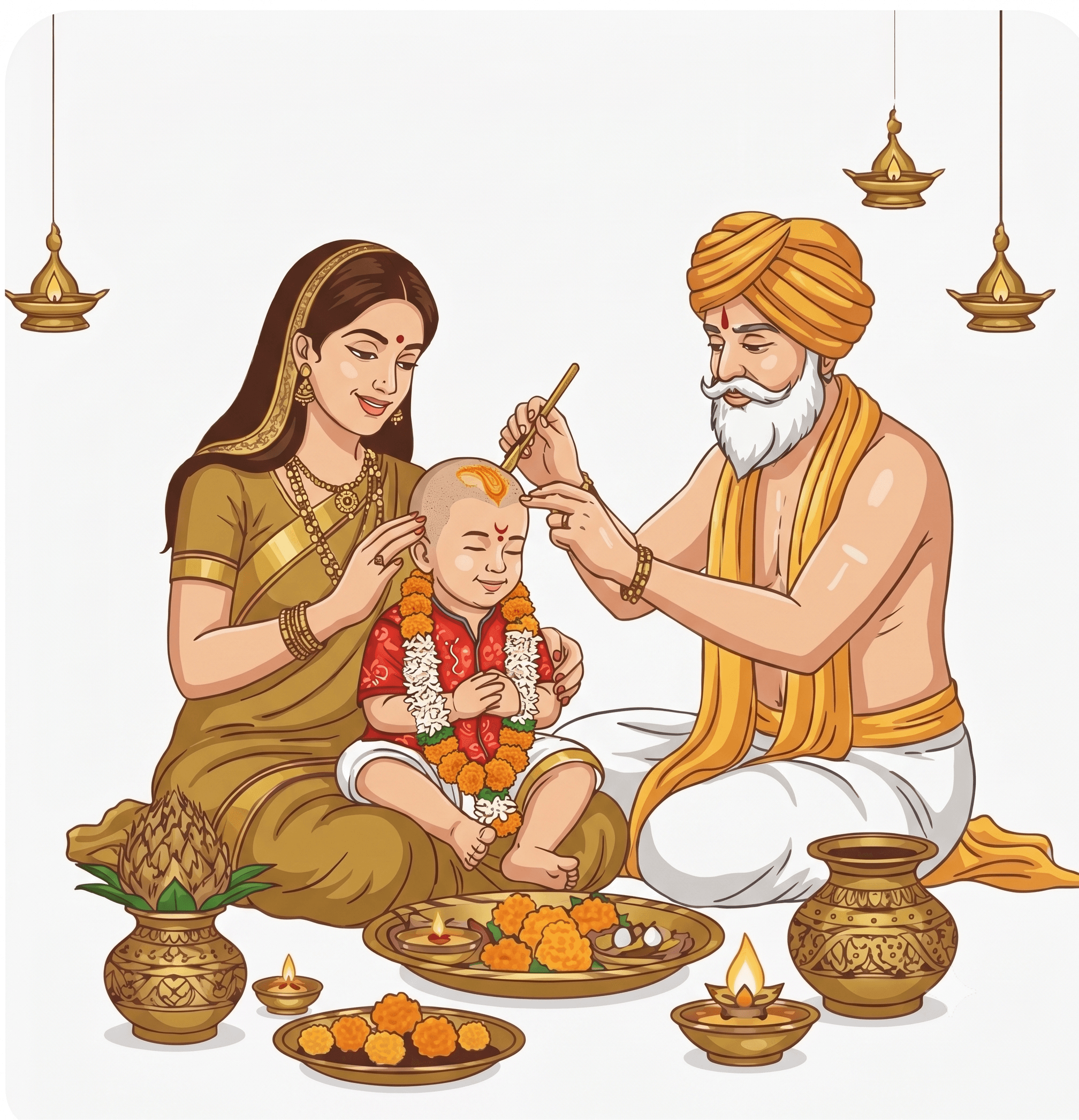
Mundan, traditionally known as Chudakarana, Chaula or Choula Karma, is the ceremony in which a child’s hair is cut or shaved for the first time.
Mundan is one of the traditional Hindu Samskaras, but there is no single method followed by every family. The child’s age, place of ceremony, ritual steps and even whether the whole head is shaved depend on family and regional tradition.
Choosing a Mundan date involves more than selecting a generally auspicious day. A personalised Muhurat may consider:
- the child’s Janma Nakshatra,
- Moon sign and Chandrabala,
- Tarabala,
- Tithi and Nakshatra,
- weekday,
- auspicious Lagna,
- Rahu Kaal and other unsuitable periods,
- location-specific sunrise,
- family tradition.
Use an annual list to shortlist a suitable day, then confirm the final time for the child’s birth details and the ceremony location.
Mundan Muhurat 2026 at a Glance
The following dates and base time intervals are calculated for New Delhi, India. Times after midnight have been converted into ordinary next-day notation for clarity.
| Date | Day | New Delhi base interval |
|---|---|---|
| January 21, 2026 | Wednesday | 7:14 AM to 2:49 AM, January 22 |
| January 29, 2026 | Thursday | 7:32 AM to 1:57 PM |
| February 11, 2026 | Wednesday | 10:53 AM to 7:03 AM, February 12 |
| February 12, 2026 | Thursday | 7:02 AM to 1:43 PM |
| February 18, 2026 | Wednesday | 5:00 PM to 9:16 PM |
| February 26, 2026 | Thursday | 6:49 AM to 12:12 PM |
| February 27, 2026 | Friday | 10:49 AM to 10:35 PM |
| March 6, 2026 | Friday | 9:30 AM to 5:56 PM |
| March 16, 2026 | Monday | 9:43 AM to 6:30 AM, March 17 |
| March 25, 2026 | Wednesday | 6:20 AM to 1:52 PM |
| March 27, 2026 | Friday | 10:09 AM to 6:17 AM, March 28 |
| April 3, 2026 | Friday | 8:45 AM to 6:09 AM, April 4 |
| April 13, 2026 | Monday | 5:58 AM to 1:11 AM, April 14 |
| April 23, 2026 | Thursday | 5:48 AM to 8:52 PM |
| May 1, 2026 | Friday | 5:40 AM to 10:55 PM |
| May 4, 2026 | Monday | 9:58 AM to 5:27 AM, May 5 |
| May 11, 2026 | Monday | 3:27 PM to 1:29 AM, May 12 |
| June 17, 2026 | Wednesday | 5:22 AM to 9:41 PM |
| June 24, 2026 | Wednesday | 5:24 AM to 5:24 AM, June 25 |
| June 25, 2026 | Thursday | 5:24 AM to 4:30 PM |
| July 2, 2026 | Thursday | 9:28 AM to 5:26 AM, July 3 |
| July 3, 2026 | Friday | 5:27 AM to 11:23 AM |
| July 9, 2026 | Thursday | 10:40 AM to 2:56 PM |
| July 15, 2026 | Wednesday | 11:53 AM to 9:47 PM |
| July 20, 2026 | Monday | 7:10 PM to 4:04 AM, July 21 |
These are broad Panchang intervals, not ready-to-use ceremony slots. Before fixing the start time, remove Rahu Kaal, Yamaganda, Gulika and any unsuitable Lagna periods for the ceremony location.
Month-Wise Mundan Dates in 2026
January 2026
- January 21
- January 29
February 2026
- February 11
- February 12
- February 18
- February 26
- February 27
March 2026
- March 6
- March 16
- March 25
- March 27
April 2026
- April 3
- April 13
- April 23
May 2026
- May 1
- May 4
- May 11
June 2026
- June 17
- June 24
- June 25
July 2026
- July 2
- July 3
- July 9
- July 15
- July 20
The conservative list used here does not provide a general New Delhi Mundan date after July 20. One commonly followed reason is that Chudakarana is preferred during selected Uttarayana solar months and before the restricted monsoon or Chaturmas period. Other calculators using broader rules may produce additional dates, so the method used on the page should always be stated clearly.
Which Tithis Are Considered Suitable for Mundan?
Common Muhurat traditions consider the following Tithis supportive for Chudakarana:
- Dwitiya,
- Tritiya,
- Panchami,
- Saptami,
- Dashami,
- Ekadashi,
- Trayodashi.
Monday, Wednesday, Thursday and Friday are frequently used, subject to the child’s chart and the remaining Panchang factors.
A Tithi or weekday alone does not make the entire day auspicious. The Nakshatra, Moon’s position, Lagna and prohibited intervals must also be checked.
Auspicious Nakshatras for Mundan
Nakshatras commonly considered for Mundan include:
- Ashwini,
- Mrigashira,
- Punarvasu,
- Pushya,
- Hasta,
- Chitra,
- Swati,
- Jyeshtha,
- Shravana,
- Dhanishta,
- Shatabhisha.
Traditions differ regarding whether the child’s birth Nakshatra should be selected or avoided. This is one reason a personalised Muhurat should be checked before finalising the ceremony.
Why Does the Mundan Muhurat Change by City?
Muhurat calculations depend on local sunrise and the exact time at which Tithi, Nakshatra and Lagna change.
Delhi, Mumbai, Bengaluru, Kolkata and London therefore cannot always use an identical ceremony window. Rahu Kaal and other daytime divisions also shift with sunrise and sunset.
Use a location-based Daily Panchang for the ceremony city instead of copying a New Delhi time throughout India.
Should the Child’s Kundli Be Checked?
A personalised Mundan Muhurat may consider the child’s:
- Janma Nakshatra,
- Moon sign,
- Tarabala,
- Chandrabala,
- eighth-house sensitivity,
- current planetary period,
- suitable Lagna at the ceremony.
Some Muhurat traditions avoid a Moon placement that is difficult from the child’s natal Moon. Because different schools apply these rules differently, the general calendar should not be presented as a guaranteed personal recommendation.
Parents can first generate the child’s birth Kundli and then compare the selected day through a location-based Panchang.
Simple Mundan Ceremony Procedure
The exact ceremony should follow family and regional tradition. A simple structure may include:
- Bathe and dress the child comfortably.
- Clean and prepare the worship area.
- Perform Ganesh Puja or family-deity worship.
- Make a Sankalpa for the child’s health, character and wellbeing.
- Allow an experienced person to cut a small lock first, where customary.
- Have the remaining hair removed carefully by a trained barber.
- Bathe or gently clean the child’s scalp.
- Offer prayer, charity or food according to family custom.
The ceremony does not have to become excessively elaborate. The child’s comfort, hygiene and safety should remain the priority.
Safety During the Mundan Ceremony
A young child may become frightened by an unfamiliar environment, loud sounds or shaving equipment.
Keep the ceremony calm and avoid holding the child in a painful or forceful position. Use clean equipment and an experienced barber. Stop if the scalp is injured or the child becomes excessively distressed.
Do not apply irritants, ash, strongly perfumed substances or unverified home remedies to freshly shaved skin.
Mundan is a religious and cultural practice. It should not be advertised as a guaranteed treatment for thicker hair, better intelligence or protection from illness.
Can Mundan Be Performed at a Temple?
Yes. Many families perform Mundan at home, a local temple, a family shrine or a pilgrimage centre.
Before travelling, confirm:
- the temple’s booking rules,
- barber arrangements,
- hygiene standards,
- permitted ritual items,
- crowd conditions,
- the child’s food and rest schedule.
A famous temple does not automatically make an unsuitable or exhausting time better for a young child.
Why Do Different Websites Show Different Dates?
Differences usually arise because Muhurat calculators may use different rules.
One calendar may:
- limit Mundan to selected Uttarayana months,
- exclude all of Chaturmas,
- use only Tithi and Nakshatra,
- add auspicious Lagna windows,
- remove Rahu Kaal and Bhadra,
- personalise dates through Tarabala and Chandrabala.
Consequently, one source may end its list in July while another publishes dates later in the year. Neither list should be copied without explaining its calculation method.
The practical takeaway is simple: first shortlist a date for the ceremony city, then refine it with the child’s Janma Nakshatra, Tarabala and Chandrabala.
Use the Muhurat tools to explore auspicious timings, verify the date through the Hindu Calendar, remove the local Rahu Kaal, and refine the start time with the Hora Chakra.
Frequently Asked Questions
What is Mundan Sanskar?
Mundan or Chudakarana is the traditional first-haircut or head-shaving ceremony performed for a child.
How many Mundan Muhurat dates are listed for 2026?
The conservative New Delhi list used in this article contains 25 dates between January 21 and July 20, 2026.
Are these timings valid throughout India?
No. The listed timings are for New Delhi. Exact Muhurat changes with location, sunrise and Panchang transitions.
Can Mundan be performed without a Muhurat?
Some families follow a selected Muhurat, while others follow a temple date, pilgrimage custom or family tradition. The decision belongs to the family.
Is the child’s birth Nakshatra important?
It can be important in personalised Muhurat selection because Tarabala and Chandrabala are often considered.
Is Mundan medically necessary?
Mundan is a cultural and religious ceremony. Medical care or scalp concerns should be discussed with a qualified healthcare professional.
Are there Mundan dates after July 2026?
The conservative New Delhi list used here ends on July 20. Broader calculators may show additional dates because they apply different rules. State the calculation method rather than combining incompatible lists.