Moon Sign vs Ascendant: Difference, Meaning and Importance
Understand the difference between Moon sign and Ascendant in Vedic astrology. Learn what each reveals, how they are calculated, which is more important and how both should be read together.
Moon Sign vs Ascendant in Vedic Astrology
Your Moon sign and Ascendant are two of the most important reference points in a Vedic birth chart, but they do not describe the same part of life.
The Moon sign, also called Chandra Rashi, is the zodiac sign occupied by the Moon at the time of birth. It is closely connected with the mind, emotional habits, memory, comfort and the way a person internally responds to experience.
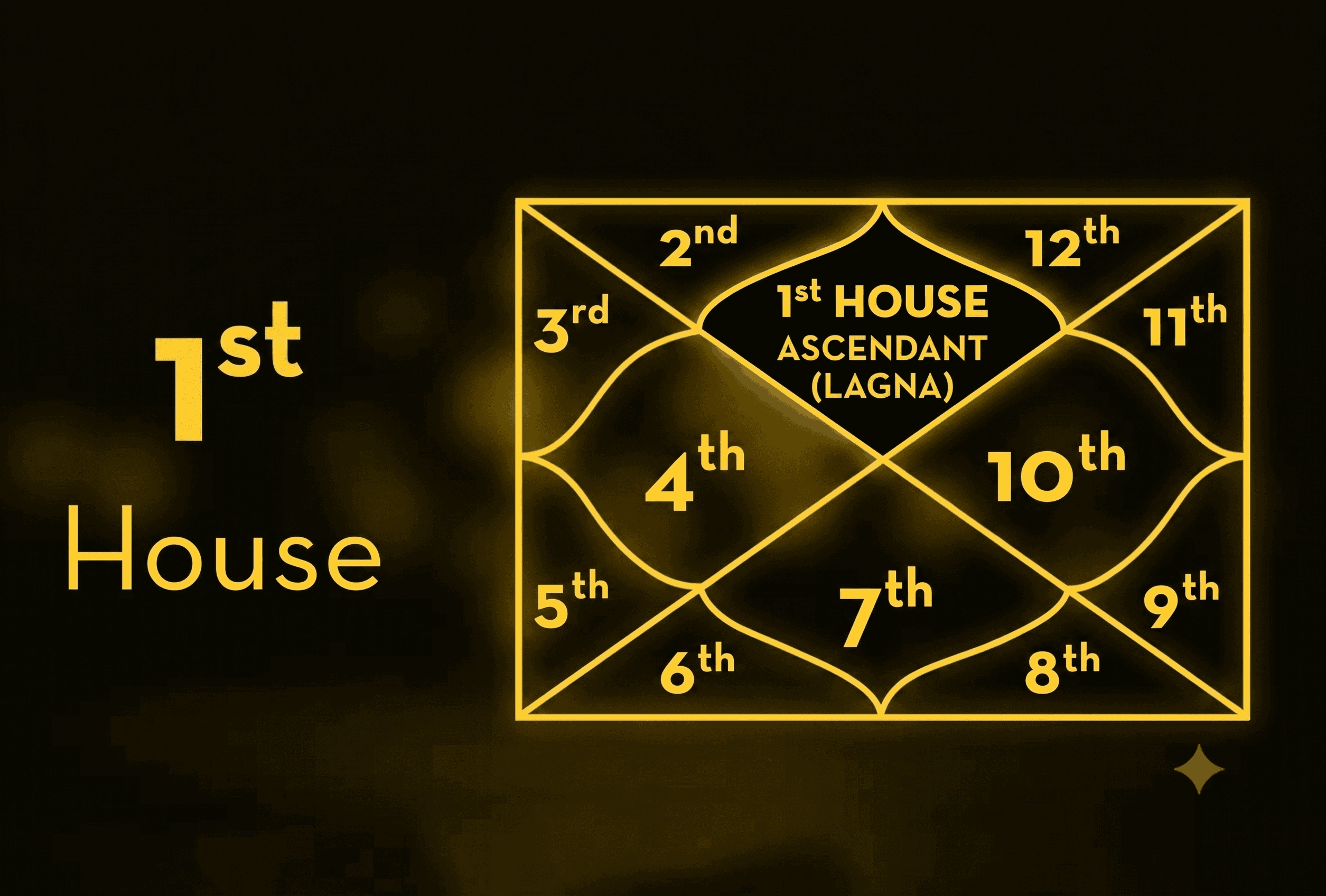
The Ascendant, also called Lagna or Rising Sign, is the zodiac sign rising on the eastern horizon at the exact time and place of birth. It establishes the first house and determines the complete house structure of the Kundli.
In simple language:
The Ascendant describes the life you directly live, while the Moon sign describes how that life is experienced within the mind.
Neither should be used as a replacement for the other.
Moon Sign and Ascendant at a Glance
| Factor | Moon Sign | Ascendant |
|---|---|---|
| Sanskrit name | Chandra Rashi | Lagna |
| Based on | Moon’s zodiac position | Sign rising in the east |
| Mainly represents | Mind and emotional response | Body, identity and life circumstances |
| Changes approximately | Every 2¼ days | Roughly every 2 hours |
| Requires birth time | Helpful, but not always essential for the sign | Essential |
| Establishes houses | No | Yes |
| Important for transits | Especially traditional Gochara | Yes, for house-based events |
| Important for Dasha | Moon’s Nakshatra begins Vimshottari Dasha | Helps interpret Dasha by houses |
| Main lord | Moon-sign ruler | Lagna lord or Lagnesh |
These are different lenses through which the same birth chart is understood.
What Is the Moon Sign?
The Moon sign is the zodiac sign in which the Moon was placed when a person was born.
For example, if the Moon was in Taurus at birth, the person has a Taurus Moon sign, regardless of the Sun sign or Ascendant.
In Jyotisha, the Moon is associated with:
- the mind;
- emotions;
- memory;
- habits;
- comfort and security;
- instinctive reactions;
- attachment;
- imagination;
- receptivity;
- the ability to adapt to changing circumstances.
The Moon sign does not describe every thought or emotion a person will ever experience. It indicates the basic pattern through which experiences tend to be mentally processed.
Two people may face the same situation but feel very differently about it because their Moon signs, Moon Nakshatras and planetary influences are different.
What Is the Ascendant?
The Ascendant is the zodiac sign rising on the eastern horizon at the exact moment and location of birth.
The rising sign becomes the first house of the Kundli. The remaining signs then become the second, third and subsequent houses.
The Ascendant is associated with:
- physical constitution;
- health and vitality;
- visible temperament;
- self-image;
- personal direction;
- early environment;
- how a person approaches life;
- how life circumstances unfold through the houses.
The Ascendant is not simply a “mask” shown to strangers.
In Vedic astrology, it is much more important than that because it determines:
- all twelve houses;
- house lordships;
- the functional role of planets;
- the Lagna lord;
- many Yogas;
- divisional-chart Ascendants;
- house-based Dasha and transit interpretation.
Read the complete guide on what Lagna means in Vedic astrology.
The Main Difference Between Moon Sign and Ascendant
The fundamental difference is between internal experience and embodied life.
The Moon sign shows how you feel
The Moon sign reflects the mind’s natural responses.
It can indicate:
- what creates emotional comfort;
- how quickly a person reacts;
- how memories are retained;
- how safety is sought;
- how relationships and surroundings affect the mind;
- how the person handles change.
The Ascendant shows how you engage with life
The Ascendant reflects the body, personal direction and the way circumstances are directly encountered.
It can indicate:
- how the person begins things;
- the visible style of behaviour;
- physical energy and resilience;
- the areas of life emphasised through house lordships;
- the kind of experiences that shape personal identity.
The Moon may feel something deeply while the Ascendant chooses a very different outward response.
A Simple Example
Suppose someone has:
- Aries Ascendant
- Cancer Moon sign
Aries Ascendant may create a direct, active and independent approach to life.
Cancer Moon may create an emotionally sensitive mind that values familiarity, family and security.
Such a person may appear confident and quick to act, yet privately need reassurance and emotional stability.
Now consider the opposite:
- Cancer Ascendant
- Aries Moon sign
The person may appear protective, cautious or family-oriented, but internally react quickly and strongly.
The same two signs produce a different result when their roles are exchanged.
This is why general descriptions based on only one sign can feel incomplete.
Why Does the Ascendant Change Faster?
The Ascendant depends on the Earth’s rotation and the sign appearing on the eastern horizon.
It changes roughly every two hours on average, though the actual duration of each sign varies according to:
- geographical latitude;
- season;
- the sign’s rising time;
- exact birthplace.
The Moon takes approximately two and a quarter days to travel through one zodiac sign.
Therefore, many people born over two consecutive days may share the same Moon sign, while those born only a few hours apart can have different Ascendants.
Why Is Birth Time More Important for the Ascendant?
The Moon’s sign can often remain unchanged for many hours, so a rough birth time may still identify the Moon sign unless the Moon was near a sign boundary.
The Ascendant moves much faster.
A birth-time difference may change:
- the rising sign;
- the degree of Lagna;
- the Lagna Nakshatra;
- house placements;
- house lordships;
- Navamsa Lagna;
- other divisional charts;
- Muhurta and timing interpretations.
When the birth occurs near an Ascendant transition, even a small error can produce a different chart structure.
Generate a location-based birth Kundli using the most accurate available birth time.
Which Is More Important: Moon Sign or Ascendant?
For a complete Vedic astrology reading, both are important, but they perform different functions.
The Ascendant is foundational for the chart structure
Lagna determines the houses and their ruling planets.
Without an accurate Ascendant, it becomes difficult to judge:
- career through the tenth house;
- marriage through the seventh house;
- wealth through the second and eleventh houses;
- home through the fourth house;
- education, children and creativity through the fifth house;
- health through the first and sixth houses.
For analysing concrete life areas, the Ascendant is usually the primary reference point.
The Moon sign is central to mental experience
The Moon sign is essential for understanding:
- emotional wellbeing;
- mental habits;
- comfort and insecurity;
- subjective experience;
- traditional transit results;
- the starting point of Vimshottari Dasha through the Moon’s Nakshatra.
A favourable event from the Ascendant may still feel emotionally difficult if the Moon is under pressure.
A challenging period may be managed calmly when the Moon is strong and supported.
Therefore:
The Ascendant shows the event more directly; the Moon sign helps show how the event may be experienced mentally.
This is a useful principle, not an absolute rule.
Moon Sign vs Ascendant in Transit Analysis
Planetary transits can be examined from both Lagna and the Moon sign.
Transits from the Ascendant
Transits from Lagna are useful for understanding the life area being activated.
For example:
- a transit through the tenth house can activate work and public responsibility;
- a transit through the fourth may emphasise home, property or inner security;
- a transit through the seventh may bring attention to partnerships and agreements.
Transits from the Moon sign
Traditional Gochara analysis frequently counts planetary movement from the natal Moon.
This may reveal:
- mental pressure;
- emotional response;
- perceived support or obstruction;
- the subjective intensity of a period;
- traditional cycles such as Sade Sati.
Why both should be checked
Suppose Saturn moves through the tenth house from Lagna but the eighth house from the Moon.
Professionally, the person may enter a demanding period of responsibility. Internally, the same period may feel uncertain, heavy or psychologically transformative.
Looking only from the Ascendant may miss the emotional burden. Looking only from the Moon may miss the concrete career development.
Check your personal planetary transits with both reference points.
Moon Sign, Ascendant and Vimshottari Dasha
Vimshottari Dasha begins from the Nakshatra occupied by the Moon at birth.
This makes the Moon essential for calculating the starting planetary period and the remaining balance of the first Mahadasha.
However, Dasha results cannot be judged from the Moon alone.
Once the active Dasha lord is known, its results are interpreted through:
- the houses it rules from Lagna;
- the house it occupies;
- sign dignity;
- conjunctions and aspects;
- Nakshatra placement;
- Navamsa and other relevant Vargas;
- relationship with the Moon;
- current transits.
In simple terms:
The Moon helps establish the Dasha sequence, while the Ascendant helps show where its results may manifest in life.
View your Vimshottari Dasha alongside the birth chart.
How the Moon Sign Is Judged
The Moon sign is only the first step. A deeper Moon analysis includes:
Moon’s zodiac sign
The sign describes the style through which the mind processes experience.
Moon’s Nakshatra
The Nakshatra adds a more specific emotional and motivational pattern.
Two people with the same Moon sign may have different Nakshatras and therefore respond differently.
House occupied by the Moon
The house shows the life area to which the mind repeatedly returns.
For example, the Moon in the fourth house may seek emotional security through home and family, while the Moon in the tenth may be highly sensitive to work and social recognition.
Moon’s phase
The distance between the Sun and Moon helps indicate whether the Moon was waxing or waning.
This can modify vitality, receptivity and the way lunar qualities are expressed.
Aspects and conjunctions
Jupiter’s support, Saturn’s pressure, Mars’s intensity or Rahu–Ketu influence can significantly change the Moon’s expression.
A Moon sign should never be interpreted without examining these factors.
How the Ascendant Is Judged
A complete Ascendant analysis includes:
The rising sign
The sign gives the basic orientation toward life.
The exact degree
The degree determines the Ascendant Nakshatra, Pada and divisional-chart positions.
The Lagna lord
The planet ruling the rising sign is called the Lagnesh.
Its house, sign, strength and relationships strongly influence the chart.
Planets in the first house
A planet occupying Lagna may visibly shape personality, health and life direction.
Aspects on the Ascendant
Planetary aspects can support, pressure or reshape the expression of Lagna.
Strength in Navamsa
The condition of Lagna and Lagnesh in the Navamsa or D9 chart helps refine their deeper stability.
Can the Moon Sign and Ascendant Be the Same?
Yes.
When the Moon occupies the same sign that is rising, the Moon sign and Ascendant are identical.
For example, a person may have:
- Virgo Ascendant;
- Moon in Virgo.
This can create stronger alignment between visible behaviour and internal emotional responses.
However, it does not mean that the person is simple or predictable.
The final result still depends on:
- Moon’s degree and Nakshatra;
- planets in Lagna;
- Lagna lord;
- aspects;
- house lordships;
- Navamsa;
- Dasha.
The Moon may be in the first house, making emotions, perception and self-image especially influential in the person’s life.
What If the Moon Sign and Ascendant Are Very Different?
Different signs do not mean the person is fake or contradictory.
Human beings naturally have multiple layers.
A person may:
- behave confidently but feel uncertain;
- appear quiet while having a highly active mind;
- seem practical but be emotionally idealistic;
- react quickly inside yet act carefully outside;
- appear socially open but need considerable private space.
The contrast between Lagna and Moon sign can help explain why someone’s outer behaviour does not always match their internal experience.
Maturity often involves allowing these two layers to cooperate rather than forcing one to suppress the other.
General Moon-Sign Themes
These are broad emotional patterns, not complete predictions.
Aries Moon
The mind may react quickly and prefer direct movement over prolonged uncertainty.
Taurus Moon
Emotional stability, familiarity and dependable surroundings may be important.
Gemini Moon
The mind may process feelings through words, ideas and conversation.
Cancer Moon
Emotional memory, family bonds and sensitivity to the environment may be strong.
Leo Moon
The mind may seek warmth, recognition, loyalty and heartfelt expression.
Virgo Moon
Emotions may be processed through analysis, organisation and attempts to improve circumstances.
Libra Moon
Harmony, fairness and balanced interaction may support mental comfort.
Scorpio Moon
Emotions may be intense, private and deeply transformative.
Sagittarius Moon
Hope, meaning, knowledge and freedom may support emotional wellbeing.
Capricorn Moon
The mind may seek control, responsibility and practical stability during emotional situations.
Aquarius Moon
Emotional processing may involve observation, ideas, friendship and some degree of distance.
Pisces Moon
The mind may be imaginative, compassionate and highly receptive to atmosphere.
The Moon’s dignity, house, Nakshatra and planetary influences can significantly modify these tendencies.
General Ascendant Themes
These are starting points rather than final personality judgments.
Aries Ascendant
Life may be approached through initiative, independence and action.
Taurus Ascendant
The person may seek stability, continuity and practical security.
Gemini Ascendant
Curiosity, communication and adaptability may shape the approach to life.
Cancer Ascendant
Protection, emotional awareness and family may influence major decisions.
Leo Ascendant
Dignity, visibility, creativity and leadership can become important.
Virgo Ascendant
Life may be approached through analysis, organisation and practical improvement.
Libra Ascendant
Balance, partnership, aesthetics and fairness may shape behaviour.
Scorpio Ascendant
The person may approach life with intensity, caution and strong survival instincts.
Sagittarius Ascendant
Knowledge, principles, exploration and freedom may direct life choices.
Capricorn Ascendant
Responsibility, patience and long-term progress may become central.
Aquarius Ascendant
Systems, communities, ideas and social responsibility may attract attention.
Pisces Ascendant
Compassion, imagination and sensitivity may shape the person’s life direction.
The Lagna lord and full house structure must be considered before drawing conclusions.
Moon Sign vs Ascendant for Relationships
In relationship analysis, the Moon sign can help show:
- emotional needs;
- comfort patterns;
- attachment style;
- sensitivity;
- how conflict is mentally processed.
The Ascendant and its seventh house help show:
- the approach to partnership;
- the type of relationship experience attracted;
- the role of commitment in life;
- the functional condition of the seventh lord;
- concrete relationship circumstances.
Compatibility cannot be decided by matching Moon signs alone.
A proper analysis may include:
- both birth charts;
- Moon and Nakshatra compatibility;
- seventh houses and their lords;
- Venus and other relationship indicators;
- Navamsa;
- active Dashas;
- communication and real-life values.
Astrology should support thoughtful understanding, not replace consent, respect or practical judgment.
Moon Sign vs Ascendant for Career
The Ascendant is generally more important for identifying the chart’s career structure because it establishes:
- the tenth house;
- tenth lord;
- sixth house of service and work;
- second and eleventh houses of earnings;
- planetary Yogas related to professional life.
The Moon sign helps reveal:
- what kind of work feels emotionally satisfying;
- how workplace stress is processed;
- the need for security or recognition;
- mental adaptability;
- reactions to authority and uncertainty.
Someone may have a strong career indication from Lagna but feel emotionally disconnected from that work because of the Moon’s needs.
A useful career reading should consider both achievement and emotional sustainability.
Moon Sign vs Ascendant for Health
The Ascendant, first house and Lagna lord are foundational for assessing constitution and vitality in traditional Jyotisha.
The Moon can indicate:
- emotional wellbeing;
- sleep and mental rest;
- stress sensitivity;
- habits;
- the connection between emotional and physical experience.
Astrology should not diagnose illness or replace qualified medical care.
Its responsible use is to discuss general tendencies and periods requiring greater awareness, not to create fear or make medical claims.
What If the Birth Time Is Unknown?
When the birth time is unknown, the Moon sign may still be calculated if the Moon did not change signs during the possible birth window.
However, the Ascendant and houses may remain uncertain.
Without a reliable birth time, it may be difficult to confirm:
- Lagna;
- house placements;
- Lagna lord;
- divisional-chart Ascendants;
- house-based Yogas;
- precise personal transit effects.
A Moon chart can still be used as a secondary framework, but it should not be presented as a complete replacement for an accurately timed birth chart.
It is better to acknowledge uncertainty than to guess an Ascendant based only on appearance or personality.
Common Mistakes
Treating the Moon sign as the whole Kundli
The Moon is essential, but it does not establish the birth-chart houses.
Treating the Ascendant as only an external mask
Lagna represents the body and complete house structure, not merely first impressions.
Asking which one “wins”
Moon and Ascendant describe different dimensions. They do not compete.
Reading only one sign
Planetary lordship, houses, Nakshatras, aspects and Dashas can substantially change general sign descriptions.
Copying Western Sun-sign logic onto Vedic astrology
The Moon sign and Ascendant are calculated astronomical points with different functions. They should not be reduced to simple personality labels.
Ignoring birth-time uncertainty
A highly detailed Lagna reading is unreliable when the recorded birth time is doubtful.
Making deterministic claims
Neither the Moon sign nor Ascendant can guarantee success, failure, marriage, illness or wealth by itself.
A Better Way to Read Both Together
Use the Ascendant to ask:
- What area of life is being activated?
- Which houses does the planet rule?
- Where is the event likely to manifest?
- What kind of physical or practical responsibility is involved?
Use the Moon sign to ask:
- How may the person experience this internally?
- What emotional habit is being triggered?
- Does the mind feel supported, pressured or unsettled?
- How easy is it to adapt?
Then add:
- the natal planets;
- Dasha;
- Navamsa and relevant Vargas;
- current transits;
- real-life circumstances and choices.
This produces a more balanced interpretation than relying on one sign alone.
The Deeper Meaning of Moon Sign and Ascendant
The Ascendant is the doorway through which life enters personal experience.
The Moon is the inner room where that experience is remembered, interpreted and emotionally absorbed.
The doorway and the inner room may have different qualities.
A person may walk into life boldly while processing everything with great sensitivity. Another may appear gentle while carrying a restless and determined mind.
Neither layer is less real.
The Ascendant shows how the journey is entered. The Moon shows how the journey is felt.
Understanding both can create a more compassionate view of the birth chart—and of the person living it.
Frequently Asked Questions
What is the difference between Moon sign and Ascendant?
The Moon sign is the sign occupied by the Moon and describes mental and emotional patterns. The Ascendant is the sign rising at birth and establishes the houses and direct life circumstances.
Which is more important?
The Ascendant is foundational for houses and concrete life areas. The Moon sign is essential for the mind, emotional experience, Gochara and Vimshottari Dasha. Both are necessary.
Is Moon sign the same as Rashi?
In common Vedic astrology usage, Rashi often refers to the Moon sign, although technically every planet occupies a Rashi.
Is Ascendant the same as Lagna?
Yes. Ascendant, Rising Sign and Lagna refer to the zodiac sign rising on the eastern horizon at birth.
How often does the Moon sign change?
The Moon remains in one sign for approximately two and a quarter days.
How often does the Ascendant change?
It changes roughly every two hours on average, although the duration varies by sign and location.
Can Moon sign and Ascendant be the same?
Yes. This occurs when the Moon occupies the rising sign.
Can I know my Moon sign without birth time?
Sometimes, provided the Moon remained in the same sign throughout the possible birth period. Exact Nakshatra and degree may still require a reliable time.
Can I know my Ascendant without birth time?
An accurate Ascendant usually requires the exact birth time and birthplace.
Should transits be read from Lagna or Moon?
Both should be examined. Lagna shows the life area being activated, while the Moon helps describe the mental experience of the transit.